

I didn’t look like someone who needed help. That’s probably why I didn’t ask for it sooner.
I had a prescription. A calendar full of meetings. A fridge stocked with LaCroix and Chardonnay. I was managing—until I wasn’t.
My anxiety was out of control, but my life didn’t look like a crisis. So I kept telling myself I was fine. That the meds needed time to kick in. That I just needed to work out more. Or meditate. Or get a new mattress.
But the truth?
No amount of self-care could cancel out the nightly drinking I wasn’t ready to name.
It wasn’t until I entered Dual Diagnosis Treatment at On Call Treatment in Waltham, MA that things actually changed.
I Looked Functional, But I Felt Like I Was Drowning
From the outside, I was the definition of high-functioning.
I responded to emails on time. I showed up for dinner plans. I even remembered birthdays. But on the inside, I was carrying a constant, quiet panic—like I was always five minutes behind on something that didn’t exist.
The alcohol helped me shut that feeling down. Temporarily.
I wasn’t drinking during the day. I wasn’t “blackout” drinking. So I convinced myself it wasn’t a problem.
But when I really looked at it, drinking had gone from “an occasional glass” to “a necessary buffer between me and my brain.”
My Medication Wasn’t Failing—It Was Competing
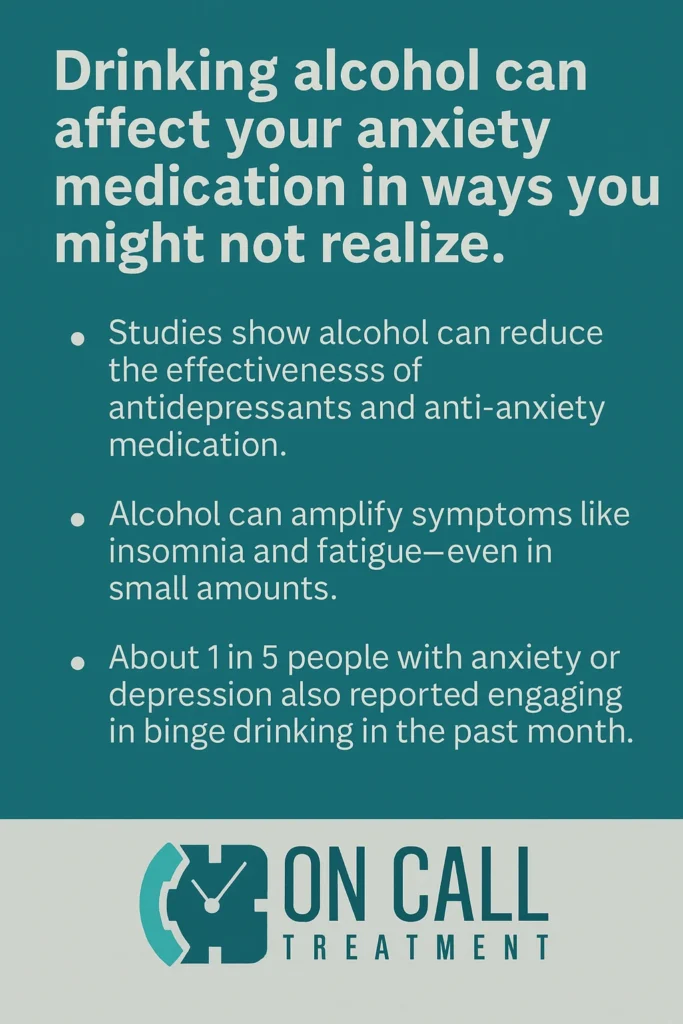
Here’s what no one told me when I started anxiety meds: alcohol doesn’t just “take the edge off.”
It can actually cancel out the medication’s benefits.
Anxiety medications—especially SSRIs, SNRIs, and benzodiazepines—are meant to regulate brain chemistry. But alcohol disrupts that balance. It slows down the central nervous system, numbs emotional processing, and impairs sleep. Even small amounts.
In my case, it was like trying to balance on a seesaw with one foot nailed to the floor. I wasn’t making progress because I was stuck in a chemical contradiction.
I Wasn’t in Denial—I Was in Survival Mode
This part’s important: I didn’t think I was being dishonest with myself. I thought I was doing my best.
Because on paper, I wasn’t “that bad.” I wasn’t crashing cars or losing jobs or getting called out by friends.
But emotionally? I was burnt out. Physically? I was tired all the time.
And mentally? I felt like someone had dimmed the lights on my life.
That’s what Dual Diagnosis Treatment helped me see:
I wasn’t just anxious. I was using alcohol to manage anxiety—and it was keeping me stuck.
Dual Diagnosis Treatment Showed Me the Missing Link
I got referred to On Call Treatment by a psychiatrist who finally said, “This isn’t working because your brain is fighting itself.”
Dual Diagnosis care looks at both mental health and substance use—because they often feed off each other.
At On Call, I wasn’t labeled or boxed in. I was listened to.
They didn’t push sobriety on day one. They asked questions. They adjusted my treatment plan to include both my anxiety and my alcohol use. And they gave me tools to figure out what I actually needed when I reached for a drink.
That was the turning point.
What Changed When I Stopped Drinking
I wish I could say the change was instant. It wasn’t.
The first week without alcohol was strange. I didn’t know what to do with myself after work. The silence felt louder.
But by week two?
- My thoughts felt clearer
- My sleep was deeper
- My panic attacks were less frequent
- My medication actually started working
Most surprisingly, I started laughing again—real laughing. Not that forced, polite kind I’d been faking for months.
This Wasn’t About Rock Bottom—It Was About Finding Solid Ground
I didn’t lose everything. I didn’t have a dramatic collapse. I didn’t wake up in jail or an ER.
And for a while, I thought that meant I didn’t “qualify” for treatment.
But high-functioning doesn’t mean healthy.
It just means you’re holding it together on the outside while falling apart inside.
If that’s you—if your mental health feels like a constant tug-of-war and nothing is helping—it might be time to stop asking what’s wrong with you and start asking what’s interfering.
For me, it was alcohol. For you, it might be something else.
But either way: you don’t have to keep white-knuckling your way through life.
How On Call Treatment in Waltham Made It Safe to Be Honest
The first time I walked into On Call Treatment, I was bracing for judgment. I didn’t get any.
Instead, I got a team that understood nuance. A plan that was flexible. A space that made honesty feel… possible.
They didn’t treat me like a “problem.” They treated me like a person who’d been doing their best with half the puzzle pieces.
And when we finally put those pieces together—mental health and substance use—I started feeling like myself again.
You Don’t Have to Wait Until You Break
If you’re high-functioning but secretly struggling, please know this:
You don’t have to collapse to qualify for care.
You don’t have to get worse before you’re allowed to get better.
Dual Diagnosis Treatment exists for people just like us—people who seem okay but know they’re not.
Frequently Asked Questions About Dual Diagnosis Treatment
What is Dual Diagnosis Treatment?
Dual Diagnosis Treatment is care that treats both a mental health condition (like anxiety or depression) and a substance use issue (like alcohol or drug use) at the same time. It’s designed for people whose symptoms are intertwined—and who won’t get better treating just one side.
How do I know if I need Dual Diagnosis Treatment?
If you’re struggling with your mental health and regularly using substances to cope—even if it’s “just to relax”—you might benefit. Especially if your meds don’t seem to be helping, or your symptoms get worse after drinking or using.
Do I have to be completely sober to start?
Not always. At On Call Treatment, they meet you where you are. They help you understand your patterns, not shame you for them. Some people reduce gradually. Others stop right away. It’s based on your needs—not a rulebook.
What if I’ve tried therapy or meds and nothing worked?
You’re not alone. Many people with dual diagnoses feel like treatment “didn’t work” before—because they were only treating part of the problem. When both issues are addressed together, progress becomes possible again.
Is Dual Diagnosis Treatment available near me?
Yes. If you’re in Massachusetts, On Call Treatment’s Waltham center offers local, personalized care from a team that understands the complexity of high-functioning mental health and substance use.
📞 Ready to Feel Like Yourself Again?
You don’t need to explain it all. You don’t have to be sure. You just have to be ready to try something different.
Call (833) 287-7223 or visit our Waltham Dual Diagnosis Treatment page to talk to someone who gets it.
We’ll walk you through what comes next—with no pressure and no judgment.